






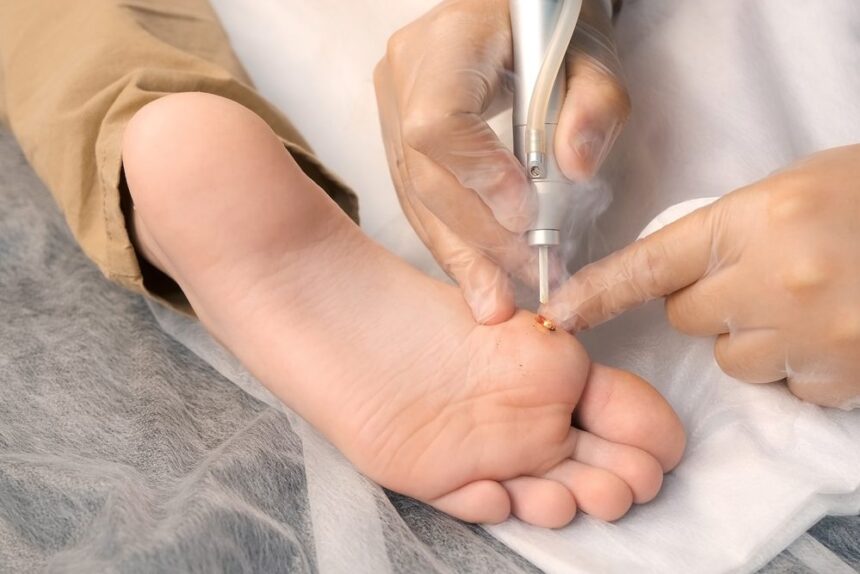
Plantar warts are small, rough growths on the feet that often develop on weight-bearing areas like the heels or balls of the feet. These growths result from an infection with the human papillomavirus (HPV) in the outer layer of skin on the soles of your feet. You might notice them as grainy lesions interrupted by tiny black pinpoints, which are small, clotted blood vessels. Here are some home treatment options for plantar warts:
Salicylic Acid
One accessible method for managing plantar warts involves topical acid treatments. Salicylic acid works by peeling away the infected skin in layers. This ingredient is available in various forms at your local pharmacy, including:
- Liquids
- Gels
- Adhesive pads
- Drops
- Ointments
To use it effectively, wash your foot and soak it in warm water to soften the skin, and then gently file away dead skin with a pumice stone or emery board. Applying the acid directly to the wart avoids irritating the surrounding healthy skin. Repeat this process daily for several weeks, as consistency is key to seeing any changes. Covering the area with a bandage or duct tape after application may help the acid penetrate deeper.
Freezing Kits
Freezing therapy, or cryotherapy, offers another approach to treating warts at home. These over-the-counter kits typically use a mixture of dimethyl ether and propane to achieve low temperatures; the goal is to destroy the wart tissue by freezing it rapidly. You apply the freezing agent using a provided applicator directly onto the lesion. A blister usually forms around the treated area within a few days. Freezing therapy may also cause mild redness or swelling, but these symptoms typically subside within a few days. Eventually, the dead skin falls off, hopefully taking the wart with it. You may need to repeat the treatment every two weeks until the wart disappears.


Padding and Exfoliation
The primary goal may be to manage discomfort while waiting for the body’s immune system to fight the virus naturally. Warts on the bottom of the foot are painful because walking presses them inward. Specialized padding can relieve this pressure; moleskin patches or felt pads with a hole cut in the center redistribute your weight away from the sensitive spot.
Exfoliation is a complementary step to other treatments or as a standalone maintenance habit. Thick calluses often form over plantar warts, making them harder to treat and more painful to walk on. Regularly using a pumice stone helps keep this thickened skin under control, but be sure to avoid using the same pumice stone on healthy skin or other parts of your body, as the virus spreads easily through contact.


Visit a Podiatrist for Plantar Warts
While home remedies are helpful for many, they do not resolve every case of warts. Persistent or painful warts may require professional intervention to fully eliminate the virus. A podiatrist can provide stronger treatments, such as prescription-strength acids, laser therapy, or minor surgical procedures. If you have diabetes or poor circulation, skipping home treatment and seeing a specialist immediately helps avoid complications. Schedule a consultation with a podiatrist today.