






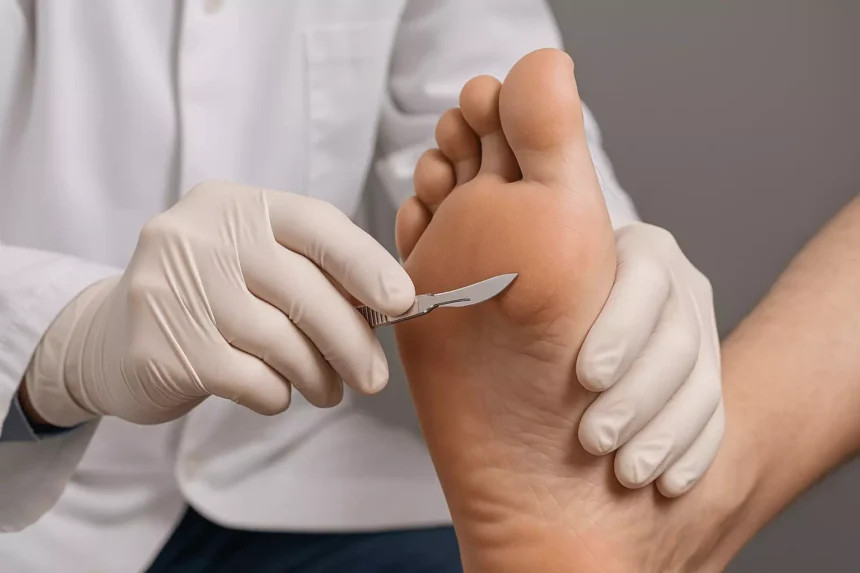
You can manage some minor foot issues at home with podiatrist-recommended techniques and household items. These home remedies may help reduce or eliminate discomfort before you need an office visit. Regular attention to your feet helps stop small problems from turning into chronic issues. Here is more information about some effective home remedies for common foot problems, and when to see a doctor:
Home Remedies for Ingrown Toenails
While severely ingrown toenails may need the help of a podiatrist, you can often try to treat the condition at home first. Warm water soaks help soften the skin around a nail that is growing into the toe border. Add Epsom salts to a basin with water and soak your foot multiple times a day for short periods to alleviate the pressure. This practice makes the nail more pliable for future trimming, and when done properly, can also help prevent future ingrowth.
A podiatrist typically recommends cutting nails straight across rather than rounding the corners to prevent ingrowth. This technique keeps the nail path clear and discourages the toenail edges from causing irritation during physical activity. Using clean clippers helps avoid infection in the area.
Wearing shoes with a spacious toe box can reduce the pressure that forces nails into the skin. Tight footwear compresses the toes together and exacerbates the discomfort of an already sensitive nail or toe. A podiatrist can help you evaluate your shoe size to make certain your feet have enough room to function. Choosing appropriate shoes is one lifestyle change that may help avoid chronic inflammation and discomfort.



Home Remedies for Warts
Warts are a common viral infection that you may be able to manage through various at-home methods. Plantar warts may respond to over-the-counter applications containing salicylic acid, allowing layers of the wart to peel away over weeks or months. Some evidence suggests that covering the area with duct tape creates an unfavorable environment for the wart, and using an at-home cryotherapy kit can also be an effective treatment. Combining methods may potentially boost the results.
Professional Treatment for Other Concerns
Home care has limitations when dealing with infections or structural issues in the foot that affect your daily routine. Yellowed or brittle nails may indicate a fungal infection that requires prescription-strength medications, which a podiatrist provides. A podiatrist may offer laser therapy or oral treatments that penetrate deeper than typical topical creams for better results.



Structural concerns like flat feet or bunions cause chronic pain that affects your gait and posture; custom orthotics support fallen arches and redistribute weight across the entire foot surface. These specialized inserts allow a podiatrist to help you align the lower body and reduce strain on the joints.
Plantar fasciitis causes heel pain and requires professional diagnostic tools for an accurate assessment, after which a podiatrist can recommend various treatments. Some treatments may include:
- corticosteroid injections
- physical therapy exercises
- night splints to manage discomfort
Find a Podiatrist Near You
By combining home care with professional advice from a podiatrist, you can create a comprehensive approach to maintaining your foot health. Monitoring and communicating with a podiatrist about changes in your feet allows the podiatrist to provide customized interventions and treatments for your lifestyle and specific case. To learn more about how to maintain your foot health, consult a podiatrist near you.